A simple medication tracking system for aging parents (that the whole family can follow)
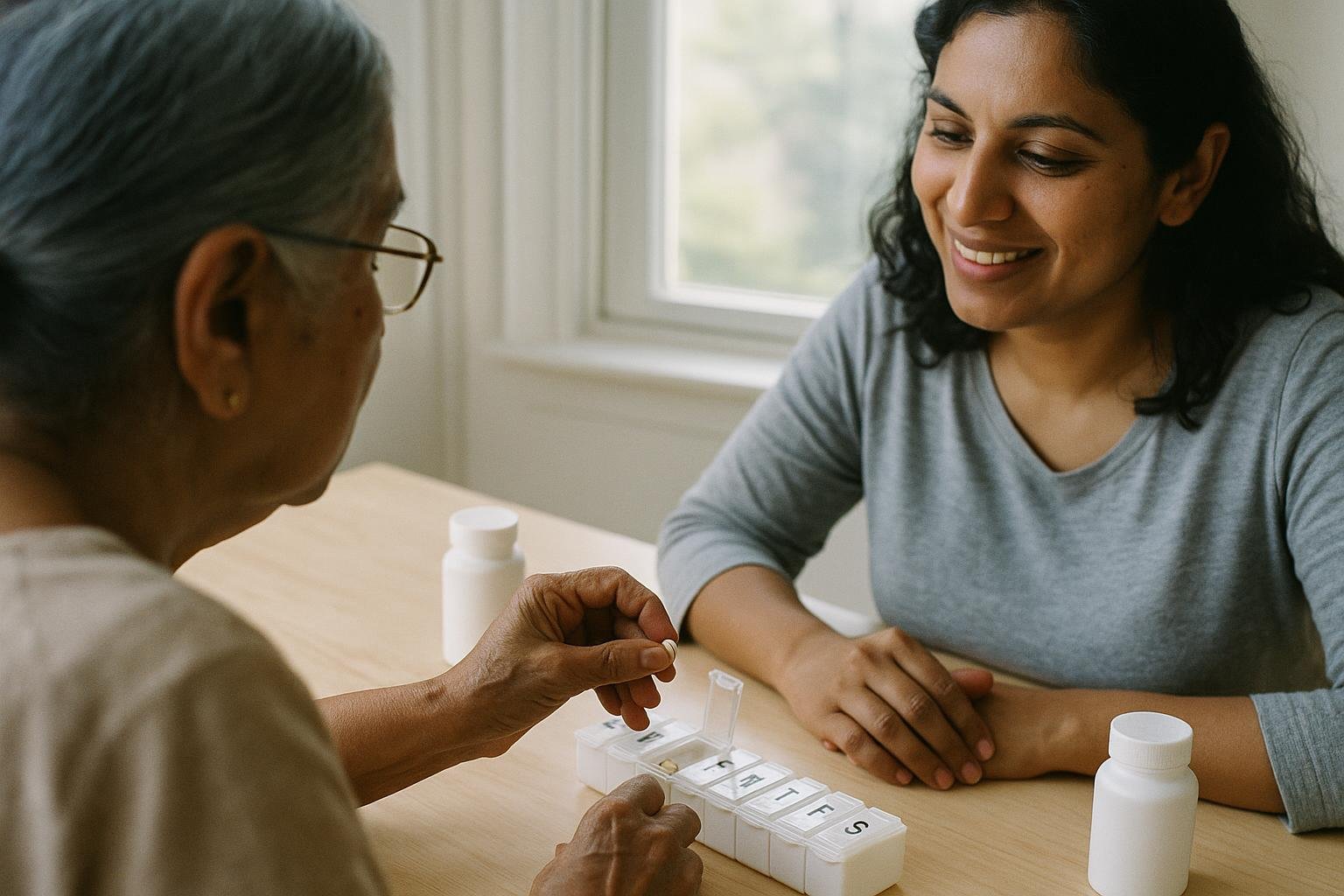
Medications are where caregiving gets risky fast. An aging parent might take a half-dozen prescriptions on different schedules, prescribed by different doctors, refilled at different times. Miss a dose and a condition slips; double a dose because two people both “handled it” and you have a real problem. The fix isn't a better memory — it's a simple system the whole family can follow. Here's one that works.
Step 1: Build one master medication list
Everything starts with a single, authoritative list — not three half-remembered ones. For each medication, capture:
- Name and strength (e.g. Lisinopril 10mg)
- What it's for, in plain language
- Dose and timing (how much, when, with or without food)
- Prescribing doctor and the pharmacy
- Refill date and how many refills remain
Don't reconstruct this from memory. Ask the pharmacy to print a current list, or photograph every bottle and work from the labels. This list is the foundation — everything else hangs off it.
Step 2: Make the daily schedule obvious
Translate the list into a simple when-to-take-what schedule, grouped by time of day (morning / midday / evening / bedtime). For many families a weekly pill organizer filled every Sunday is the physical half of this; the schedule is the reference that says what shouldbe in each compartment. The point is that anyone — a sibling covering for the weekend, a paid caregiver — can glance at it and know exactly what's due.
Step 3: Log doses as they happen
This is the step that prevents both missed and doubled doses, and it's the one paper systems handle worst. The moment a dose is given, it gets logged: what, when, and by whom. A shared log means the next person doesn't have to guess whether Mom already had her morning meds — they can see that Sarah gave them at 9:14.
A whiteboard on the fridge works if one person does all the care. The moment more than one person is involved — or anyone is remote — you need a log everyone can see and update from their own phone. That shared, time-stamped log is the heart of what Carelo does, and it was the most-missed feature when apps like CareZone disappeared (more on that here).
Step 4: Stay ahead of refills
Running out is its own emergency. Note each refill date on the master list, set a reminder a few days ahead, and where possible use pharmacy auto-refill and sync medications to refill on the same day so it's one trip, not five.
Step 5: Bring the list to every appointment
An up-to-date medication list is the single most useful thing you can hand a doctor. It catches dangerous interactions, prevents duplicate prescriptions, and saves the “what is she taking again?” scramble. Keep it current, and keep it where whoever's at the appointment can pull it up.
The one rule that ties it together
One list, one schedule, one log — visible to everyone who helps. The families who stay on top of medications aren't the ones with the best memories. They're the ones who stopped relying on memory at all.
Frequently asked questions
- What is the best way to track an elderly parent’s medications?
- The most reliable method is a single master medication list plus a shared dose log. The list captures every drug, dose, timing, and prescriber; the log records each dose as it’s given, so any family member can see what was taken and when. A weekly pill organizer handles the physical sorting, while the shared log prevents missed or doubled doses across multiple caregivers.
- How do you stop two caregivers from double-dosing a parent?
- Use a shared, time-stamped dose log that everyone updates the moment a medication is given. Double-dosing happens when two people each assume the other hasn’t handled it; a log everyone can see from their own phone removes the guesswork. A whiteboard works for a single caregiver, but a shared app is needed once more than one person is involved or anyone is remote.
- What should a medication list for an aging parent include?
- Each entry should include the medication name and strength, what it’s for in plain language, the dose and timing (with or without food), the prescribing doctor and pharmacy, and the refill date with refills remaining. Build it from the pharmacy’s printed list or the actual bottle labels rather than from memory.
- Is there a free app to track medications for the whole family?
- Carelo offers a shared medication tracker as part of a 7-day free trial, then a subscription. It keeps the master list, dose log, and reminders visible to the whole care circle, which is the feature many families missed when CareZone shut down.
Carelo's guides are general information, not medical, legal, or financial advice — always consult a qualified professional about your situation.
← Back to all guides